What Florida Home Sellers Need to Know About Insurance in 2026
-
 Research Team
 - 08 Jun, 2026
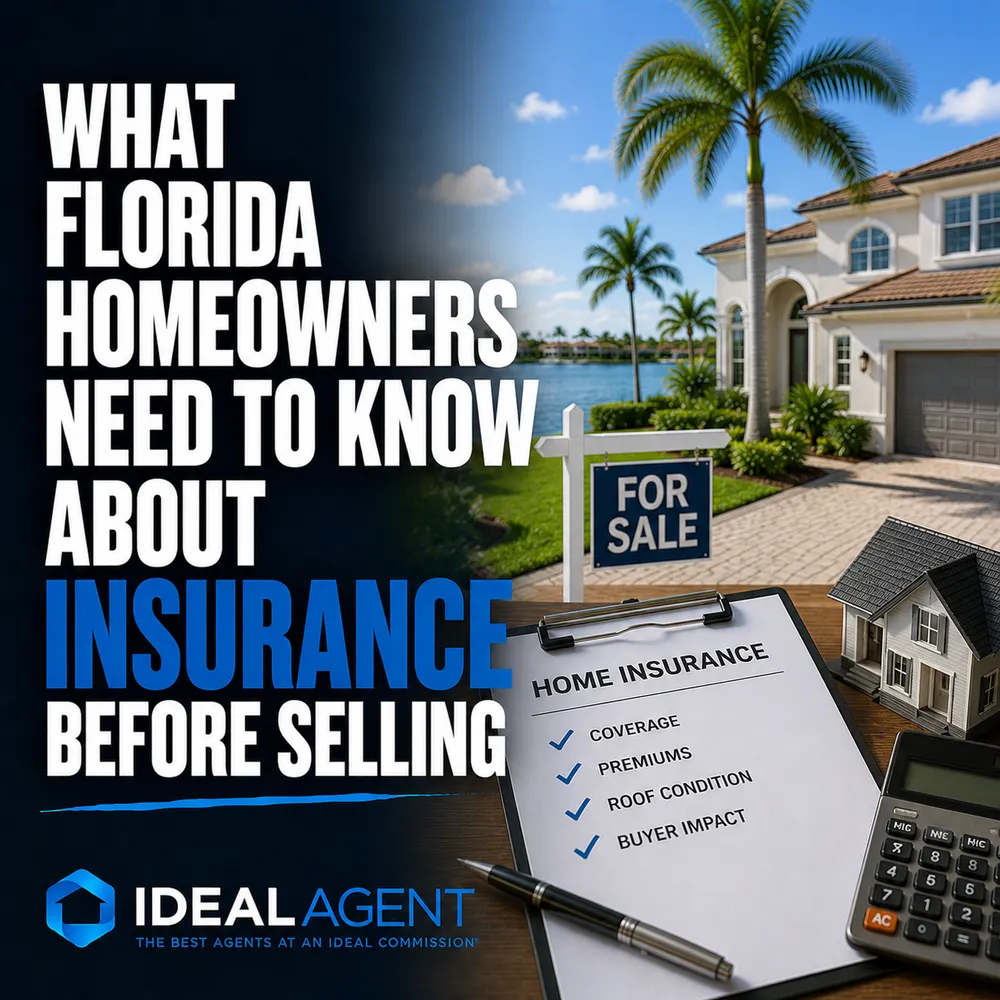
Florida’s homeowners’ insurance crisis has fundamentally changed what it means to sell a home in the state. What was once a background consideration — buyers will sort out their own insurance — has become a front-and-center issue that directly affects whether your home can be financed, how fast it sells, and what price you can realistically command. Florida sellers who understand this dynamic and prepare for it come out significantly ahead of those who don’t.
Short answer: Florida’s insurance environment in 2026 means buyers are scrutinizing roof age, flood zone status, and wind mitigation features before making offers. Sellers with newer roofs, impact windows, and homes outside high-risk flood zones have a meaningful market advantage. Sellers with older roofs or properties in flood zones must address these issues directly — in pricing, preparation, or both.
Why Florida’s Insurance Market Affects Your Home Sale
When a buyer finances a Florida home purchase, their lender requires proof of homeowners’ insurance before closing. In most states, this is a routine step. In Florida in 2026, it can be a deal-killer.
Multiple major insurers have exited the Florida market in recent years, citing catastrophic claims losses from hurricanes and litigation costs. Citizens Property Insurance — the state-backed insurer of last resort — has grown substantially and is actively working to depopulate by pushing policyholders to private carriers. The private market that remains has become significantly more restrictive about which homes they’ll insure and at what premium.
The result for sellers: A meaningful percentage of buyers who fall in love with your home may discover they cannot obtain insurance at a cost that fits their budget — or at all, for homes with certain characteristics. When a buyer can’t insure, they can’t close. And when deals fall through late in the process, it’s expensive and stressful for everyone.
The Four Insurance Factors That Affect Florida Home Sales
1. Roof Age
This is the single most important insurance factor in Florida home sales. Most private Florida insurers will not write a policy on a home with a roof older than 15 years for asphalt shingle roofs, or 20–25 years for tile or metal roofs. Some are even more restrictive.
What this means for sellers:
- Buyers’ insurance agents will ask for the roof age during their quote process
- Lenders may require a roof inspection as a condition of the loan
- If the roof is too old, the buyer’s insurer may decline coverage, require a replacement as a condition, or offer coverage only through Citizens (which has its own requirements)
- Buyers who discover a roof issue late in the process may try to renegotiate the price or exit the deal
What sellers can do:
- Get a 4-point inspection before listing to know exactly what insurers will see
- Consider replacing an aging roof before listing — a new roof typically adds more to your sale price than it costs in competitive markets (see our dedicated roof replacement post)
- If you don’t replace the roof, price to reflect a buyer’s likely replacement cost and disclose the age prominently upfront
2. Wind Mitigation Features
Florida insurance premiums are heavily influenced by wind mitigation features — construction characteristics that reduce damage risk in hurricanes and tropical storms. A wind mitigation inspection (typically $75–$150) documents these features and can dramatically reduce a buyer’s insurance premium.
Key wind mitigation features that reduce insurance costs:
- Hip roof (slopes on all four sides): Significantly lower premium than gable roofs
- Roof deck attachment: How the roof deck is fastened to the structure (staples vs. ring-shank nails matters)
- Roof-to-wall connections: Hurricane straps or clips vs. toe nails
- Opening protection: Impact-resistant windows and doors, or hurricane shutters for all openings
- Roof covering type and age: Qualifying roofing materials with recent installation
Why this matters for sellers:
If your home has strong wind mitigation features, make sure buyers know it. A wind mitigation report that shows significant discount potential is a marketing asset. If your home has impact windows and a hip roof, a buyer’s annual premium may be $1,500–$3,000 lower than on a comparable home without these features — a real advantage when buyers are comparing options.
3. Flood Zone Status
FEMA designates flood zones based on risk assessment. Homes in Special Flood Hazard Areas (SFHA) — typically Zone AE, Zone VE, and similar designations — are required to carry flood insurance when financed with a federally-backed mortgage.
Flood insurance costs have risen significantly under FEMA’s Risk Rating 2.0 methodology, which was fully implemented in 2023. Some coastal Florida properties that previously had token flood insurance premiums of $500–$1,000/year are now seeing premiums of $5,000–$15,000+ annually.
For sellers in flood zones:
- Disclose flood zone status — it’s a required disclosure in Florida
- Obtain an elevation certificate if you don’t have one; it documents your home’s elevation relative to the base flood elevation and directly affects the buyer’s flood insurance premium
- Understand that buyers will factor monthly flood insurance costs into their affordability calculation, which affects what they can offer
- Price with flood zone costs in mind — buyers compare your total carrying cost (mortgage + insurance) to alternatives
For sellers outside flood zones:
- If your home is in Zone X (minimal flood risk), this is a genuine selling advantage — prominently mention it in your listing
4. The 4-Point Inspection
Florida insurers routinely require a 4-point inspection for homes older than approximately 25 years before binding coverage. The 4-point inspection reviews four systems: roof, electrical, plumbing, and HVAC.
Sellers of older Florida homes should obtain a 4-point inspection before listing. Common issues that insurers flag:
- Roof age or condition (as discussed)
- Knob-and-tube or aluminum wiring (will be declined by most private insurers)
- Polybutylene plumbing (may be declined due to historical failure rates)
- HVAC units more than 15–20 years old (may require documentation or replacement)
Knowing what your 4-point inspection will show before the buyer’s insurer sees it gives you control. You can repair or disclose proactively rather than having these issues emerge as deal-killers after you’re under contract.
Florida Sellers: The Insurance Pre-Sale Checklist
Before listing, document and investigate the following:
- Roof age and material — obtain documentation of installation date
- Wind mitigation inspection — have it completed and available for buyers
- Flood zone status — confirm FEMA designation; obtain elevation certificate if in or near SFHA
- 4-point inspection — complete if home is 25+ years old
- HVAC age and service records
- Electrical panel type — aluminum wiring or Federal Pacific/Zinsco panels are significant issues
- Plumbing material — polybutylene or galvanized pipes are known concerns
- Citizens vs. private insurance — know what your home currently insures for and through whom
- HOA/condo master policy details (if applicable)
How This Affects Pricing Your Florida Home
Insurance-related issues don’t just affect whether your home sells — they affect what it sells for. A buyer comparing two similar homes at the same price will factor in:
- Annual insurance premium difference
- Roof replacement cost if the roof is aging
- Flood insurance cost if in an SFHA
If your home costs a buyer $3,000/year more in insurance than the competing listing down the street, that buyer will offer less on your home — often $20,000–$40,000 less when you capitalize that annual cost over a typical holding period.
Understanding this math — and either addressing the underlying issue or pricing to reflect it — is the difference between a realistic pricing strategy and one that wastes months on market.
How a Top Local Agent Navigates This
Insurance complexity is one of the most Florida-specific challenges in real estate — and it’s an area where local agent expertise matters enormously. A top Florida agent knows which insurance issues are manageable, which are deal-killers, how to price and market around them, and which buyers (cash buyers, investors) are less affected by insurance complications.
IDEAL AGENT matches Florida sellers with top 1% local agents who have navigated these exact challenges in your market. At a pre-negotiated 2% listing commission — vs. the traditional 2.5–3% — you start with better net proceeds that give you more flexibility to address insurance issues before they cost you at the negotiating table. If a buyer comes directly through your agent’s marketing with no separate buyer’s agent, total commission is just 2%. When a buyer’s agent is involved, IDEAL AGENT recommends a competitive 2–2.5% buyer’s agent commission.
Frequently Asked Questions
Will my homeowner’s insurance transfer to the buyer?
No — homeowner’s insurance policies are not transferable. Buyers must obtain their own policy before closing. Your existing policy remains in effect until closing, at which point it is cancelled.
Do I have to disclose my insurance premium to the buyer?
Florida law requires disclosure of known material defects and flood zone status. Your current insurance premium is not required to be disclosed, but buyers will determine their own insurance costs during the due diligence period.
What if a buyer can’t get insurance on my home?
If the buyer can’t obtain insurance, they typically cannot close with a financed transaction. They may have the option to exit via an insurance contingency if their contract includes one. To prevent this, address known insurable issues (roof age, electrical, plumbing) before listing or price to reflect them.
Is a wind mitigation inspection worth it for sellers?
Yes — if your home has wind mitigation features, documenting them benefits buyers and is a marketing asset. The inspection costs $75–$150 and can reduce a buyer’s annual premium by hundreds to thousands of dollars, making your home more attractive and affordable.
Can I sell a Florida home that Citizens won’t insure?
A home that Citizens won’t insure (due to extreme condition or exposure) effectively requires a cash buyer. In some markets — particularly coastal luxury — this is manageable. In others, it significantly limits your buyer pool and affects price. Address the underlying insurable condition issues before listing if at all possible.
Insurance is now a front-line selling issue in Florida — not an afterthought. Get matched with a top local Florida agent through IDEAL AGENT who knows how to position your home in today’s insurance environment, and list at a pre-negotiated 2% commission.